

100 Interesting Space Facts That’ll Blow Your Mind
Written by: Jack De GraafReading time: 22 minsLast updated: June 1, 2021
Neptune’s moon, Triton, orbits the planet backwards. It’s the only large moon in our solar system that does this.FacebookSHAREPinterestSAVEWhatsappSHARE
With new space discoveries happening weekly, it’s no surprise we wanted to write these 100 random & interesting facts about space!
Space facts are always interesting to learn!
As time goes by, technological advancements have seen us learn more facts about space in the past century than in all time before that.
We’ve literally searched the universe for the most amazing space facts, including facts about the planets in our solar system, moons, the Milky Way, and beyond! We’re pretty sure #100 will make you smile!
Before you begin your journey through time & space, check out our video below with our 5 favorite space facts from this list!Without further ado, let’s launch right into these 100 crazy facts about space!
Mercury & Venus are the only 2 planets in our solar system that have no moons.
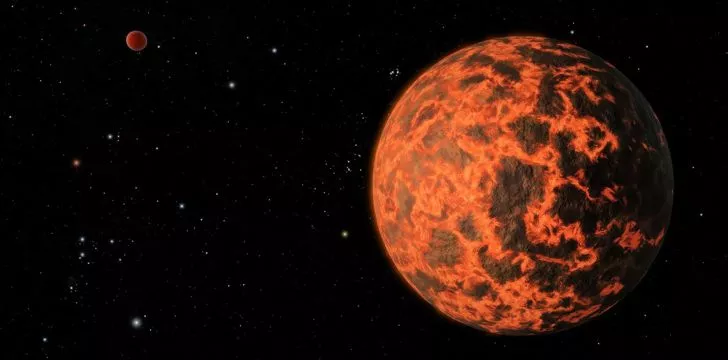
In total, there are 176 confirmed moons that orbit the planets in our solar system, with some of them being bigger than Mercury itself!
If a star passes too close to a black hole, it can be torn apart.
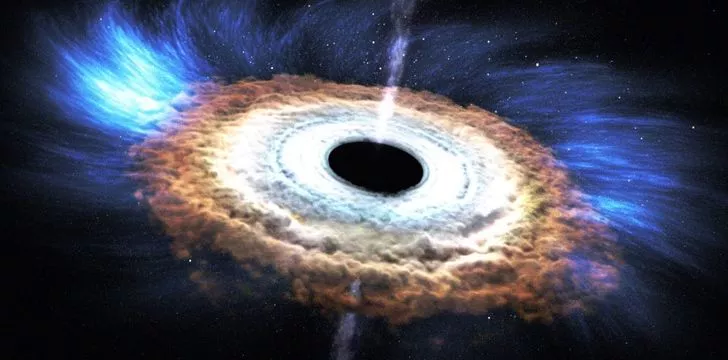
For 20 years, a team of astronomers observed a star at the center of our galaxy orbiting a black hole.
The star has now got close enough to the black hole for “gravitational redshift” to occur which is where the star’s light loses energy as the black hole’s gravity intensified.
The hottest planet in our solar system is Venus.

Most people think that this would be Mercury, as it is the closest planet to the sun.
However, Venus has a lot of gasses in its atmosphere which creates a “Greenhouse Effect” that causes a constant temperature of 864° Fahrenheit (462° Celsius) everywhere on the plant’s surface.
Our solar system is 4.57 billion years old.
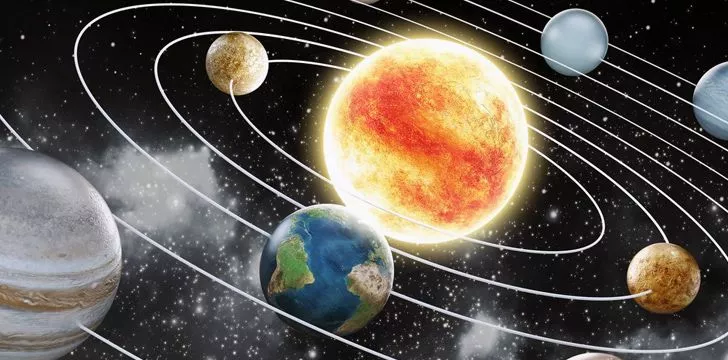
Well, give or take 30 million years(ish). Accurately speaking, it is 4.571 billion years old.
Scientists estimate that in about 5 billion years, our Sun will expand becoming a Red Giant.
In about 7.5 billion years its expanding surface will swallow up and engulf the Earth.
Enceladus, one of Saturn’s smaller moons, reflects 90% of the Sun’s light.
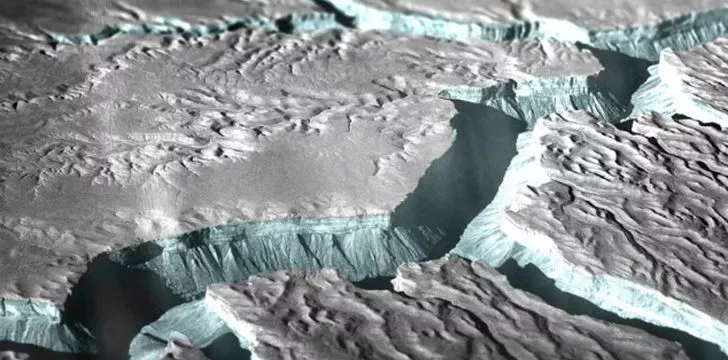
Because Enceladus’ icy surface reflects sunlight rather than absorbing it, temperatures reach as low as -394° Fahrenheit (-201° Celsius).
The highest mountain discovered is the Olympus Mons, which is located on Mars.

Its peak is 16 miles (25 km) high, making it nearly 3 times higher than Mount Everest.
And not only is it tall, but it’s also 374,015 ft² (114,000 m²) wide – that’s an area the size of Arizona!
The Whirlpool Galaxy (M51) was the first celestial object identified as being spiral.
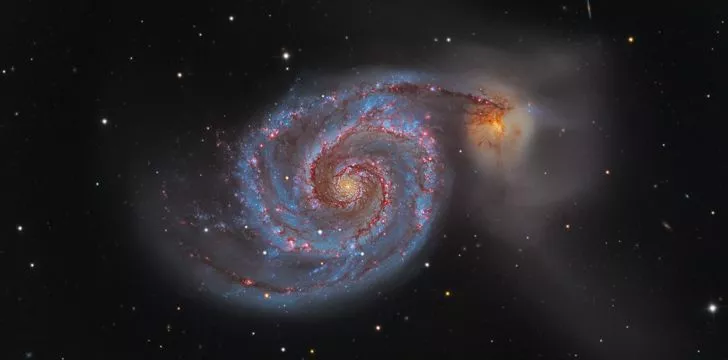
The grand, spiraling arms of the Whirlpool Galaxy are made up of long lanes of stars and gas, sprinkled with lots of space dust.
These arms act as star formation factories, compressing hydrogen gas and creating clusters of new stars.
A light-year is the distance covered by light in a single year.
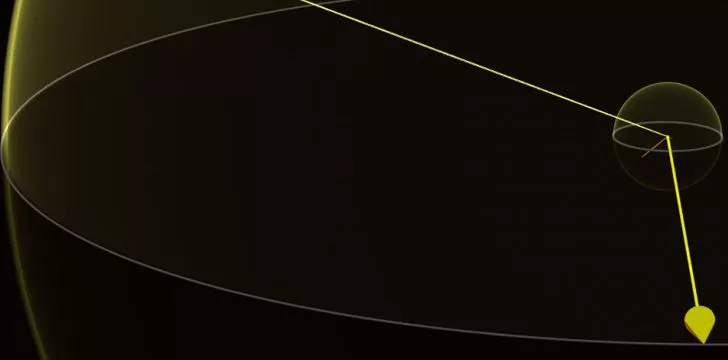
Light moves at the velocity of about 186,411 miles (300,000 km) a second.
So one light-year equates to roughly 5,903,026,326,255 miles!
The Milky Way galaxy is 105,700 light-years wide.
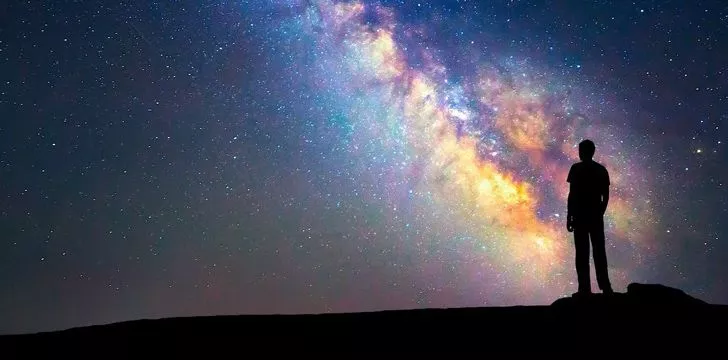
It would take a modern spacecraft 450,000,000 years to travel to the center of our galaxy!
You can read more unbelievable space facts with this list of Milky Way facts!
The Sun weighs about 330,000 times more than Earth.

It is about 109 times the diameter of Earth and is so large the Earth could fit inside the sun about 1,300,000 times over!
In fact, the sun is so gigantic that it contains 99.85% of all mass in our solar system.
Footprints left on the Moon won’t disappear as there is no wind.
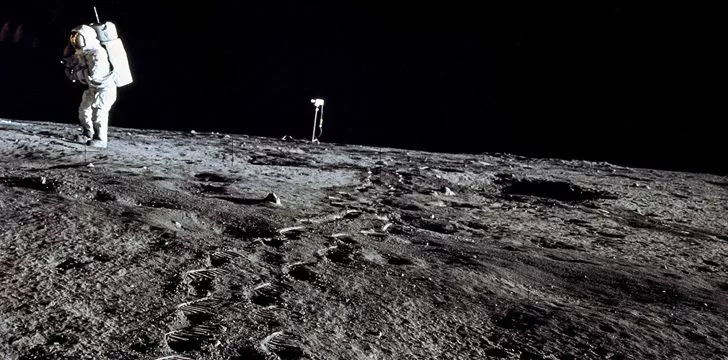
But wait a minute… if there’s no wind to blow them away then why is the flag blowing? Well, it actually wasn’t blowing.
That rippling you see is because of a stubborn telescopic horizontal rod that the astronauts were struggling to remove from the flag’s upper hem.
Still unsure whether we’ve walked on the Moon? Here are 5 common Moon landing myths debunked.

 through the fact
You must be logged in to post a comment.