Why Gates Failed to Stay the World’s Richest Person
Bill Gates was the world’s richest person ever since he co-founded Microsoft in 1975, but as of Thursday, he’s no longer the richest person in the world. What happened? How did Gates lose his position as the richest person in the world? The answer lies in his company’s stock performance over the past several years, and more specifically, his own personal decisions regarding the use of his wealth. Let’s break it down and see what we can learn from Gates and from his business partner Paul Allen as we look forward to 2018 and beyond.
1. How Bill Gate Lost his World’s Wealthiest Person Title In 2000, Bill Gates was named the world’s wealthiest person by Forbes magazine with a net worth of $85 billion. Since then, his wealth has fluctuated wildly depending on the stock market and Microsoft’s success. In 2009, he was back on top with a net worth of $40 billion. As of October 2017, Gates is no longer the world’s richest person. That title now belongs to Amazon founder Jeff Bezos. So, what happened?
2. A Huge Gift from Buffet It’s been a while since Bill Gates was the world’s richest person. In fact, he hasn’t been since 2018 when Jeff Bezos took the title. And now, even though Gates is still one of the wealthiest people on the planet, he’s no longer the king of rich. So, what happened? Why did Gates fail to stay atop the mountain of money?
3. Gates Gives Away More Than Any Other Billionaire As of October 2017, Bill Gates is no longer the world’s richest person. He has been unseated by Amazon founder Jeff Bezos. This is largely due to Gates’ philanthropic efforts; he has given away more money than any other billionaire. In fact, he has given away so much money that his net worth is now only about $89 billion. So why did Gates fail to stay the world’s richest person?
4. So Who Will be the Next? There are a few reasons why Bill Gates is no longer the world’s richest person. One reason is that he has given away a lot of his money over the years to charity. As of 2019, he had given away $35.8 billion dollars. That’s almost 20% of his total net worth!
5. The Future of Giving – How Will it Change? In 2006, Bill and Melinda Gates launched the Giving Pledge, a campaign to encourage wealthy individuals and families to donate at least half of their fortune to philanthropic causes. The initiative has been phenomenally successful, with over 170 billionaires joining the ranks of pledgers. But as society evolves, so too must philanthropy. Here are four ways giving will change in the future.
DISCLAIMER ~ VIDEO IS ONLY ON EDUCATIONAL PURPOSE ONLY COPYRIGHT DISCLAIMER UNDER SECTION 107 OF THE COPYRIGHT ACT 1976 , ALLOWANCE IS MADE FOR “FAIR USE ” FOR PURPOSES SUCH AS CRITICISM , COMMENT , NEWS , REPORTING , TEACHING ,SCHOLARSHIP AND RESEARCH. FAIR USE IS A USE PERMITTED BY COPYRIGHT STATUTE THAT MIGHT OTHERWISE BE INFRINGING . NON PROFIT , EDUCATIONAL,OR PERSONAL USE TIPS THE BALANCE IN FAVOUR OF FAIR USE.
THANK YOU , LOVE FROM DAZZEROP YT 😘😘💟💟❤❤❤💛💛💯💯🤏
ALL EMOJI ~ [ 😀😃😄😁😆😅🤣😂🙂🙃😚☺😗😘🤩😍🥰😇😊😉😙🥲😋😛😜🤪😝🤑🤗🤭🙄😒😏😶😑😐🤨🤐🤔🤫🤕🤒😷🥳😴🤤😪😔😬😬🥸 ]
Mermaids, amongst other mystical creatures, play a huge part in popular culture. But are they real, or have they existed in the past?
These creatures of natural beauty that live in the vast oceans have existed in books, texts, and movies for hundreds of years.
Is this because they were once real like dinosaurs, or are they a dreamy illusion that keeps us creative and fuels our imagination?
In this article, we will look at the history of mermaids and determine if they are real.
What are mermaids?
null
Mermaids are beautiful creatures that consist of a woman’s upper body attached to a beautiful fishtail, and they have appeared in texts for hundreds of years.
The mystical beings have been written about in folklore across Europe, Asia, and Africa.
The legend of mermaids comes from the tales of Merfolk or Merpeople.
The Merfolk were known as water-dwelling humans; mermaids were the name for the female representations of these mystical beings.
Mermen were the male water dwellers.
There is no evidence that they are real, as their representations appear within folklore and mythology, but it is possible that Merfolk existed, however, not how we depict them today.
What defines a mermaid?
null
Mermaids have been represented in varied ways across the world, from seductive evil creatures of the sea to beautiful, elegant women.
Mermaids are represented in two lights. The first is that they are evil temptresses that lure sailors into the sea with their seductive songs and attractive looks.
The other is that they are women of the sea, like a sea goddess, painted or depicted in a beautiful, elegant manner.
They are shown to be lonely and longing for a man or relationship and to be human.
These depictions of good and evil representations have adapted over time and have been heavily influenced by Germanic Romantic poets and post-romantic painters.
In Greek mythology, they are known as sirens; they were dangerous creatures that tempted sailors.
When was the first documentation of a mermaid?
null
One of the first documentations of Merfolk comes from a Chinese text written in the fourth century BC.
The Shanhaijing is a classical Chinese text that speaks of mythical beasts, the mountains, and the great geography of the area.
In China, “jiāorén” translates to shark people and is widely written about across medieval texts.
The first appearance of documenting mermen being in the “Record of strange things” text written in the early sixth century CE.
Mermaids appear in Homer’s Odyssey written around 675–725 BCE, where their seductive singing is the killer of men at sea.
This is the first literary text that describes their tempting songs luring sailors in, but in this poem, they manage to escape uninjured.
Mermaids also appear in Assyria around 1,000 BC.
The legend tells of the goddess Atargatis and her transformation into a mermaid after jumping into a lake following feeling ashamed of killing her lover.
She was unable to take the full form of a fish but instead turned into a mermaid because of her beauty.
She is known as the goddess Derketo in Greek mythology.
null
When was the first sighting of a mermaid?
The most famous documented sighting of an actual mermaid was by Christopher Columbus.
On January 9, 1493, he wrote in his logbook that he had witnessed something magical and never seen before.
Off the coast of Africa, Columbus witnessed three mermaids that elevated above the surface of the sea.
He described them very differently from folklore tales. They weren’t as beautiful and magical but simpler and fish-like with human faces.
It is argued that he was mistaken and actually saw manatees or other sea creatures that could be confused with mermaids if seen from a distance.
Who was The Little Mermaid?
The Little Mermaid is one of history’s most famous mermaid stories, after being produced into a film by Disney in 1989.
The story, originally written by Hans Christian Andersen in 1837, told the tale of a lonely mermaid who was willing to give up her life in the ocean for a real human soul.
The story was one of the first where a tragic tale of a mermaid turned into a story with a happy ending, and it is possibly the most famous mermaid tale across the world.
This was one of the first stories that showed a mermaid to be naïve and innocent, unlike most other depictions of seductive temptresses.
There is a mermaid statue in Copenhagen, Denmark, where the story was written, and it is a popular monument for tourists to visit.
In Conclusion
There is no doubt that the fascination of mermaids will continue to be passed on from generation to generation.
But the question of their existence is unknown and suggests that perhaps there may have been sightings or texts that describe them, but it isn’t solid evidence to suggest they exist.
Another theory is that the Merfolk could have existed across folklore, but just because they lived by the sea does not mean they resembled a half-fish half-human creature.
It could be that the descriptions have been interpreted many years later to depict a mythical creature.
Although they live in folklore tales, there is not strong enough evidence to suggest they exist in real life.
Becca Marsh is a travel enthusiast and a lover of nature. She is the co-founder of Global Convoy, a travel production company. When she is not filming, she enjoys writing about culture and travel.
Here at The Fact Site, we have a team dedicated to checking our content for accuracy. Occasionally we may get things wrong, or information becomes outdated. If you believe something to be incorrect, please leave us a message below.
A recent study by German historian Rüdiger Overmans found that the German military casualties were 5.3 million, including 900,000 men conscripted from outside of Germany’s 1937 borders, in Austria and in east-central Europe, higher than those originally reported by the German high command. The German government reported that its records list 4.3 million dead and missing military personnel. Civilian deaths during the war include air raid deaths, estimates of German civilians killed only by Allied strategic bombing have ranged from around 350,000 to 500,000.https://discord.com/invite/9x2JaAzwzb
The immune system is a network of cells and proteins in our body that defend against infection and illness.
The immune system builds strength by being exposed to germs, so when we are born, our immune system is still developing.
It is what keeps us alive and healthy, and without it, we wouldn’t be able to survive.
Essentially our immune system is our defense against infection and illness.
The key players in the immune system are white blood cells.
These are produced in your bone marrow, and they are hunters that go around the body looking for foreign bacteria or microbes.
What does the immune system do?
The immune system fights against invasive microbes or germs to ensure they don’t stay in our bodies.
This includes chemicals and toxins too.
The immune system keeps track of all the microbes it has ever fought.
This means that when an unwanted microbe enters the body, the immune system can recognize it and know how to attack it.
Not only does it recognize it, but it can also attack it quickly before it affects our body.
So, for example, when we catch a cough, our immune system learns how to fight it off, but this can take a week or two.
Then when our body is exposed to the same germs again, it can recognize them instantly and fight them off before they attack our body.
This means you will experience little to no symptoms of a cold you have had before as your body knows how to stop it.
null
Where can your immune system be found?
The immune system is present in many places around the body, and there are multiple elements that contribute to the immune system.
The immune system is almost like a fort, and fighting germs are its battle.
The skin acts as the barrier to prevent bacteria from entering the body.
There are mucous membranes in some of your organs that act as traps to capture the unwanted germs that enter.
null
White blood cells are the fighters, and they patrol the body through the blood, looking for harmful microbes to identify and kill.
Finally, tissues of the lymph system act as storage for the white blood cells, as well as producing them.
The immune system is almost like a castle; it has its walls to defend and its fighters to get rid of unwanted invaders.
What happens if our immune system isn’t working properly?
null
Without our immune system, we would continuously be sick, and our bodies would be exposed to endless amounts of viruses, germs, and illnesses.
Eventually, our bodies would shut down as we wouldn’t be able to fight off illness anymore.
There are many diseases and viruses that can affect our immune system, and some can even damage it to the point where it stops working.
These are known as autoimmune diseases.
Autoimmune diseases generally cause your immune systems to accidentally kill off healthy cells, which weakens your system.
Other diseases such as HIV/AIDs destroy your white blood cells, which means you are unable to fight off any unwanted bacteria.
Various conditions weaken your immune system, and some are treatable with medication to help ease the effects, but some cause your immune system to stop working altogether.
Another example is allergic reactions.
These are dramatic and false responses of the immune system.
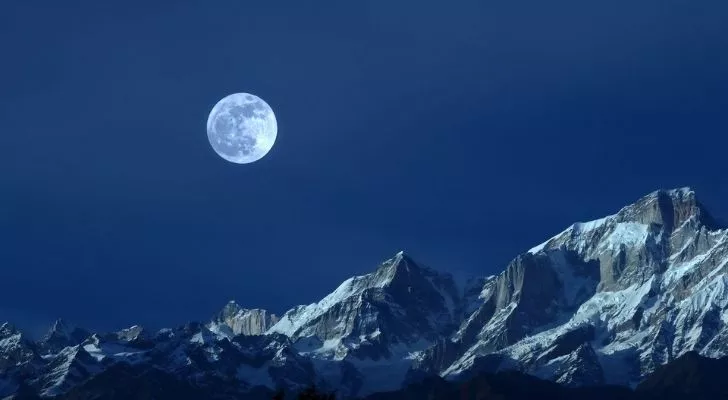
The Cold Moon is the name for the full moon in December. This is the name given in the northern hemisphere due to seasonal occurrences with the weather.
December tends to be the coldest month for many countries in the northern hemisphere.
For many, this is a difficult time of year, so the name acts as a warning.
Why call it a Cold Moon?
null
The Cold Moon obtained its name due to the change in weather. December marks the time of year where the days become long and dark.
It is also the month with the winter solstice, which is the shortest day and longest night.
November brings the cold, and by December, it has settled in. The winter solstice plays a vital role in the name and the transition to winter.
December is commonly known as the month where winter begins.
Who first called it a Cold Moon?
null
The lunar cycle was first used as an ancient way of keeping track of the time of year.
The lunar calendar allowed humans to keep track of time and seasons.
The moon names often came from relevant seasonal events in nature. The Cold Moon name derives from paganism and is associated with the Deborean Clan.
Although it is a common name used across the northern hemisphere, its roots come from early paganism in Europe.
It is associated with being cozy and warm by the fire. The moon acts as a sign to surround yourself with warmth.
For the Algonquin tribes, it was also called a Cold Moon, but for different reasons. Their name came from the cold bright light that the moon cast into the skies.
There is often no cloud cover in December, so the moon’s light can appear very cold when reflected off the frosty ground.
Is it always called a Cold Moon?
null
There are many other names for December’s full moon, such as a Full Long Night’s moon. Full Long Night’s Moon comes from the winter solstice, which has the longest night of the year.
If the full moon falls on the night of the winter solstice, it is called the Mourning Moon.
In paganism, this would have been a time of cleansing to make yourself stronger against the cold.
null
The Wishram tribe called it the Winter Houses Moon. The name came from the holiday Yule and the thought of keeping loved ones warm in your home.
Many were vulnerable at this time of year due to the harsh winters, so it was encouraged to welcome everyone into your home.
In Conclusion
December’s full moon is commonly known as the Cold Moon, and its name comes from the seasonal weather changes as the winter is in full swing.
Becca MarshBecca Marsh is a travel enthusiast and a lover of nature. She is the co-founder of Global Convoy, a travel production company. When she is not filming, she enjoys writing about culture and travel.
The Fact Site is the number one source for the most interesting & random facts about animals, celebrities, food, films, games & so much more. You will learn something about everything!
With new space discoveries happening weekly, it’s no surprise we wanted to write these 100 random & interesting facts about space!
Space facts are always interesting to learn!
As time goes by, technological advancements have seen us learn more facts about space in the past century than in all time before that.
We’ve literally searched the universe for the most amazing space facts, including facts about the planets in our solar system, moons, the Milky Way, and beyond! We’re pretty sure #100 will make you smile!
Before you begin your journey through time & space, check out our video below with our 5 favorite space facts from this list!Without further ado, let’s launch right into these 100 crazy facts about space!
Mercury & Venus are the only 2 planets in our solar system that have no moons.
In total, there are 176 confirmed moons that orbit the planets in our solar system, with some of them being bigger than Mercury itself!
If a star passes too close to a black hole, it can be torn apart.
For 20 years, a team of astronomers observed a star at the center of our galaxy orbiting a black hole.
The star has now got close enough to the black hole for “gravitational redshift” to occur which is where the star’s light loses energy as the black hole’s gravity intensified.
The hottest planet in our solar system is Venus.
Most people think that this would be Mercury, as it is the closest planet to the sun.
However, Venus has a lot of gasses in its atmosphere which creates a “Greenhouse Effect” that causes a constant temperature of 864° Fahrenheit (462° Celsius) everywhere on the plant’s surface.
Our solar system is 4.57 billion years old.
Well, give or take 30 million years(ish). Accurately speaking, it is 4.571 billion years old.
Scientists estimate that in about 5 billion years, our Sun will expand becoming a Red Giant.
In about 7.5 billion years its expanding surface will swallow up and engulf the Earth.
Enceladus, one of Saturn’s smaller moons, reflects 90% of the Sun’s light.
Because Enceladus’ icy surface reflects sunlight rather than absorbing it, temperatures reach as low as -394° Fahrenheit (-201° Celsius).
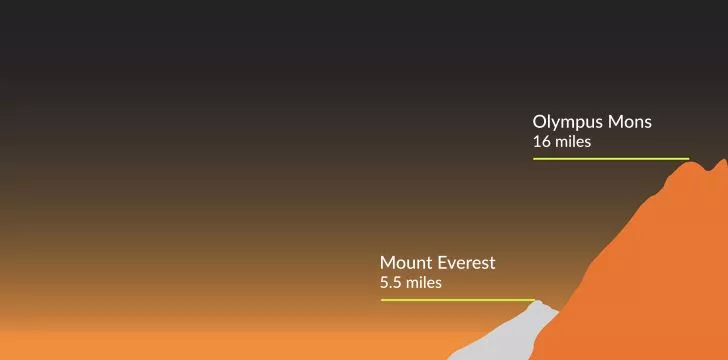
The highest mountain discovered is the Olympus Mons, which is located on Mars.
Its peak is 16 miles (25 km) high, making it nearly 3 times higher than Mount Everest.
And not only is it tall, but it’s also 374,015 ft² (114,000 m²) wide – that’s an area the size of Arizona!
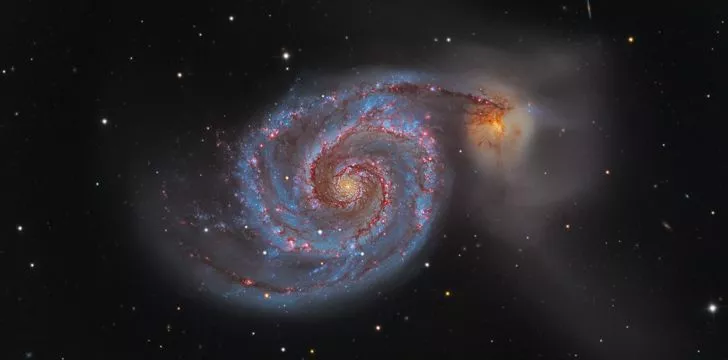
The Whirlpool Galaxy (M51) was the first celestial object identified as being spiral.
The grand, spiraling arms of the Whirlpool Galaxy are made up of long lanes of stars and gas, sprinkled with lots of space dust.
These arms act as star formation factories, compressing hydrogen gas and creating clusters of new stars.
A light-year is the distance covered by light in a single year.
Light moves at the velocity of about 186,411 miles (300,000 km) a second.
So one light-year equates to roughly 5,903,026,326,255 miles!
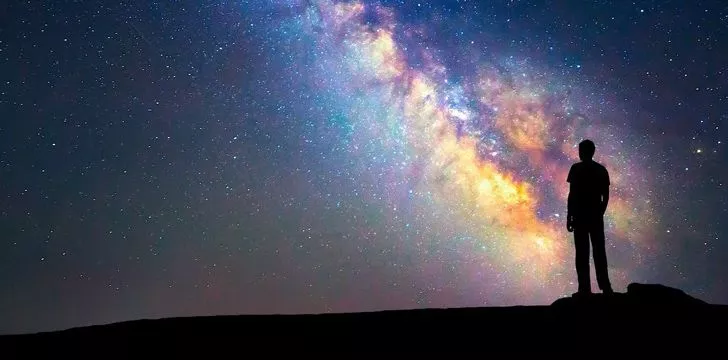
The Milky Way galaxy is 105,700 light-years wide.
It would take a modern spacecraft 450,000,000 years to travel to the center of our galaxy!
You can read more unbelievable space facts with this list of Milky Way facts!
The Sun weighs about 330,000 times more than Earth.
It is about 109 times the diameter of Earth and is so large the Earth could fit inside the sun about 1,300,000 times over!
In fact, the sun is so gigantic that it contains 99.85% of all mass in our solar system.
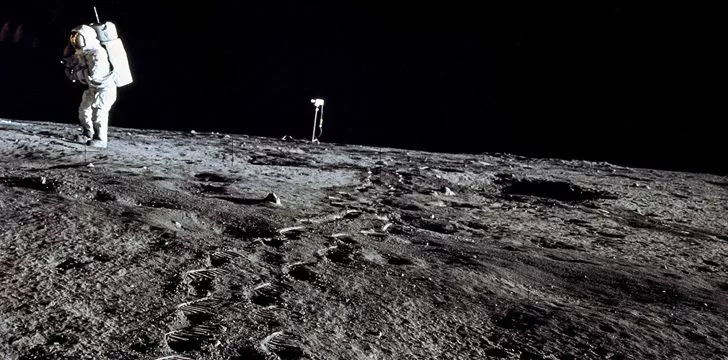
Footprints left on the Moon won’t disappear as there is no wind.
But wait a minute… if there’s no wind to blow them away then why is the flag blowing? Well, it actually wasn’t blowing.
That rippling you see is because of a stubborn telescopic horizontal rod that the astronauts were struggling to remove from the flag’s upper hem.
NEXT BLOG YOU WILL FIND THIS QUESTION IN 👈🤙🤙 WORDPRESS…………..?????
5 QUESTION ANSWER IS THAT : THE COST OF ALL THE MONEY 💰🤑 IS $37 TO $ 200000
4 QUESTION ANSWER IS THAT : THE MONITIZATION CHARGE IS CHANGE . $ 34 OR $ 12 EXACT💯💯💯💯….
3. QUESTION ANSWER IS THAT :PAYPAL IS USED IN 4 TYPES
1. CHARGE SELECTION OF ANY PLACEHOLDER
2. YOU WILL GET AWESOME REWARD
3. CUSTOMER WILL BE PAY WITH PAYPAL ….. ????
4. All charges will be increased when you USE PAYPAL U.S GOVERNMENT CHARGE ON YOUR BUYING AND PAYING SOME ONE TO YOU ……. CHARGE IS $ 20 – $300 BUY – $ 20 ON CHARGE OR BIG YOU WILL CHARGE OR SOMEONE WHO CHARGE IS $ 60 IN ALL BIG CHARGE . IF YOUR PRODUCT IS SELL AND PAY WITH PAYPAL YOUR BONUS $9- $ 12 ……
FOR MORE INTERESTING FACT 🤔😉 FOLLOW ME AND LIKE 👍😉 FOR MORE MAIL US – SINGHKANHAIYA00227@GMAIL.COM
Located on the U.S. Atlantic coast, Driftwood Beach immediately strikes you as a special place. Although it is one of many beaches in Georgia’s barrier islands, it stands out for the large, toppled trees that cover the sandy landscape.
Ocean tides and storms continually shape this Jekyll Island beach. Over the years the sand has eroded; removing the foundation for the roots to take hold, causing the trees to fall over.
I visited this unusual beach last week, following a family celebration.
Wood Stork, Jekyll Island, GA
The name implies ocean-drifted wood, but the trees that dominate the sandy expanse are not actually driftwood. They are prostrate pine, oak, and palm trees. This tree below, probably once an oak, still has the rootball intact.
Fallen tree, Driftwood Beach, GA
The nature of coastal barrier islands is protection. There are approximately 14 barrier islands along the coast of Georgia, all of them coastal landforms created by waves and tidal action. The small islands, like Jekyll Island, take the brunt of the ocean’s wrath, protecting the mainland.
Jekyll Island is only seven miles (11 km) long and 1.5 miles (2.4 km) wide. While there are some hotels and human developments from various eras, there is a handsome array of natural sand dunes, marshes and wild habitats, attracting a wide array of wildlife.
My sister Nan spotted this skink on the trail leading to Driftwood Beach.
Five-lined Skink, Jekyll Island, GA
While many of the dead trees lie on the sand, there are also some dead ones that haven’t yet fallen. Giant, whole trees are standing, but lifeless.
My sister beside this tree demonstrates how huge the dead, standing tree is. Someday it will fall, but for now it remains solidly anchored in this spot.
Driftwood Beach, Jekyll Island, GA
There were dozens of dead trees dominating the beach. It was a unique sight. Most trees remained big and strong, not broken apart, and in spite of being leafless, they retained a proud elegance in their shapely limbs and roots.
Beachgoers strolled around the trees, some climbed on the trees, some sunbathed beside them, and children built sand castles in the fine, wet sand. Some people even host weddings here.
Willet, Jekyll Beach, GA
Osprey and pelicans sailed by. Willets and sandpipers scurried on the sand and rocks, while wading birds foraged on the adjacent marsh.
Roseate Spoonbill, Wood Storks, GAWood Stork (L) and White Ibis (immature)
Across the waterway (St. Simons Sound) you can see another barrier island, St. Simon’s Island. Through this channel, cargo ships deliver goods, primarily automobiles. The yellow, arched structure seen from Jekyll Island is a giant crane. It’s one of the first things you see when you come out of the palmetto-studded trail and look out to sea.
Crane and Shipwreck, St. Simons Sound, GA
The crane is straddling the shipwreck of the Golden Ray, a cargo ship that was carrying 4,200 cars when it capsized two years ago. The ship was improperly loaded and tipped over. Fortunately there were no fatalities, and clean-up of the shipwreck is nearly complete. The rusty heap to the right of the crane is what is left, and being cut, of the Golden Ray.
We had a glorious day of ease and pleasure on Jekyll Island, watching birds, turtles, crabs, passing ships and ever-moving tides. But I’ll tell you more about this beautiful island another time.
For now, we’ll just bask in the briny air, expansive ocean, and lazing fallen trees of Driftwood Beach.
How many of those blogs do you regally visit and comment on?
I used to follow over 500 blogs! I merely followed many because they followed me first.
What a big mistake that was!
New blog posts were continually dropping onto my WordPress reader list and into my email box.
It wasn’t long before I started to feel overwhelmed by it all and realised I couldn’t possibly read and comment on every new blog post.
I started feeling guilty about not having enough time to visit and comment on every blog I followed.
Something had to change.
I decided to go through all the blogs I followed and start unfollowing some of them.
Today, I’m following 129 blogs, and I’ve set myself a target of never exceeding a total of 150.
For some, that may seem like a lot of blogs to follow. For others, not enough. But it’s the perfect balance for me.
But what mistakes was I making when following blogs?
1. Following Blogs That Publish Content I Had No Interest In
Seems obvious, doesn’t it? But have a look through the list of blogs you follow and count how many of them publish content you’re not interested in reading.
Then ask yourself why are you following them.
Many of the blogs I unfollowed were blogs that followed my blog first. I felt it polite to follow back even though I had no idea what content they published.
It was like buying a car without having test driven it first.
Before following a blog, check out some of the posts and ask yourself these two questions.
Does the content interest me enough to keep me coming back?
Does the content motivate me enough to leave valuable comments?
If you answer ‘No’ to the first question, then don’t follow.
Some of the bloggers you unfollow may unfollow you but don’t get yourself all worked up about it.
My blog loses followers almost every day. If readers don’t find my content interesting anymore, then they have every right to unfollow.
However, I take a different view on unfollowing a blog simply because they unfollowed me. That’s just plain silly.
2. Following unfriendly blogs
Two things that I dislike in blog posts are lots of swearing and belittling others.
I’m adult enough to know that most adults do swear, but when there’s too much of it in blog posts, or there isn’t any need for it, then I won’t follow.
The same goes for bloggers who publish content that belittles other people or criticises them for how they live, look, write or talk.
By all means, warn readers at the beginning that a post contains swear words or may offend, but never swear at or criticise others in the post or comments section.
If you think you’ll be offended by the content on a blog or in its comments section, don’t follow it.
3. Following one-way blogs.
While looking through those blog posts, don’t forget to also look through the comments section and see if the blogger responds to comments. If the comments are all one-way, think seriously before deciding whether to follow.
If they don’t respond to comments (especially on their ‘about me‘ page), ask yourself if the blog is worth following.
If the content is interesting, then, by all means, follow but think hard about whether it’s worth leaving comments.
If they do respond, look at the way they respond.
Are they lazily interacting with their readers? Do they respond to all comments in the same dull manner (e.g. ‘Thanks for reading!’)?
Even though a blogger may respond to all the comments, if they are not actively engaging with their readers, ask yourself if it’s worth leaving comments and following their blog.
4. Following blogs that could damage your health
There are lots of things that can damage your health when online. For example, too much screen time, becoming addicted to social media, reading too many negative articles or comments.
One of the worse things that can happen to a blogger, is feeling overwhelmed or guilty. This usually occurs when they can’t keep up with reading blog posts.
Feeling stressed and guilty for not reading posts is something every blogger should avoid.
If you’re following blogs that you believe publish too many daily posts, think about either unfollowing them or turning off notifications for those blogs when new posts are published.
Of course, we can ignore all those posts, but don’t fall into the trap of thinking you could be missing out on something if you don’t read or leave comments on them all.
Thinking you’re missing out causes guilt and stress. I’ve suffered from it myself, and know of many other bloggers who also have. Keep blogging fun.
Don’t fall into the trap of feeling obliged, guilty or stressed just because certain bloggers comment on all of your posts.
If it’s not going to cause you any guilt or stress, feel free to press the follow button, but only if you know that future content will be of interest to you and you can cope with the number of posts they are publishing.
If you believe you are following too many blogs, don’t put off unfollowing some of them. Take immediate action. You’ll feel much better for doing so.
And don’t forget to make the most of setting up receiving notifications on a daily or weekly basis rather than every time somebody publishes a new post.
5. Following ghost blogs
I’ve mentioned it many times before, but the first thing I do before deciding whether or not to follow a blog is to visit the ‘about me’ page of a blog. If there isn’t one, then I consider it a ‘ghost blog.’
If there isn’t an ‘about me’ page, it isn’t easy to find, it’s out of date, or it doesn’t contain any interesting information, I won’t follow.
Why? Because I want to find out about the person behind the blog first before deciding whether to follow or not.
If it’s out of date, then they probably don’t care about updating any content. You could be wasting your time by reading out of date information.
6. Following uncared for or neglected blogs
If a new blog I’m visiting is eye-catching, well organised, easy to navigate around, has excellent content, feels friendly, and seems a great place to be, I will press the follow button.
After all, if it looks and feels good and the content is of interest, I’m likely to read posts and leave valuable comments.
If the design of a blog is poor, takes too long to download, uses a font that is too small to read, has a brightly lit background that produces stars in front of my eyes, hasn’t been updated in years, or has lots of broken links, then I’ll move on quickly.
If a blogger doesn’t care about their blog, they are unlikely to care about their audience.
7. Following the blogs of trolls
We talked about checking out responses a blogger leaves to comments on their posts, but are those responses written in a friendly manner? And do they leave unfriendly comments elsewhere?
Because we blog or leave reviews, not everyone will agree with what we have to say.
I’ve witnessed many rude comments left by the host and by readers on many blogs.
I’ve been the victim of rude and unfriendly comments on other blogs where I’ve left a friendly comment. If the host of a blog responds to me in an unfriendly manner, I’ll unfollow their blog.
If the host of a blog allows other followers to attack readers without taking any action, I will unfollow.
I always respond to comments in a friendly, courteous and professional manner, even if a reader disagrees with what I’ve said.
If there’s evidence of a blogger attacking somebody in an unfriendly manner because they have not agreed with all or some of the contents in a post or in the comments section, then consider whether it’s worth following that blog.
Hosts of blogs should do all they can to stop trolls leaving comments on their blog posts. If they don’t, then they probably don’t care much or have any concern about the welfare of their readers.
By all means, if the content of that blog still interests you, you can still follow and never leave any comments, but be careful when reading negative responses to comments as they can often affect your mood.
Whatever you do, though, never respond to unfriendly comments by attacking the person who has left them. Leave trolls well alone.
I use all the above seven tips before deciding whether or not to follow a blog. And they all help me keep my blogging under control.
What factors are important to you when deciding whether or not to follow a blog? How many blogs do you follow? Is it too many or too few? Join the discussion by leaving your comments.
To follow Hugh on Social Media, click on the buttons below.
Hi SEers. John with you again today. It is no secret that most of us work in a solitary state when we are working on a story. It is great to have feedback on what we have written. Sadly, it is not always practical to get third-party opinions on all the directions or nuances pursued in your writing. We cannot run to a critic group or beta reader after each writing session. The importance of each session is that together they make up the whole of the work in progress. So, if sessions are going badly, the sum of the sessions will reflect the trouble. Today, I would like to offer a checklist that will give an idea of the quality of the work.
These points won’t take the place of beta readers or critical input. It is more to give the writer a gauge on whether the work is up to the quality standards on a short-term basis. A side benefit to these points is a good feeling that comes from evaluating one’s writing after each session and satisfaction with its quality.
Five Ways to Know You Are Doing Good Work on Each Writing Session
1 The first way to know you are doing good work is to evaluate the satisfaction received from the session. If there is frustration and an overall feeling of dissatisfaction, you can be sure the work is not up to your standards. The reasons could be many, but the important part is that you are not happy with what you’ve done, which will show to your readers. Best to set aside what you have and review it another day.
2 The second way to know you are doing good work is the feeling that you don’t want to stop. We all know stopping will be necessary, but the desire to go on demonstrates an excitement in the work that will be infectious to the reader. You can believe if you stop writing reluctantly, what you have written will be good. Returning to the manuscript the next day has the potential of continuing that feeling for another session.
3 The third way to know is to get emotionally involved with the character situations you are creating. If you feel empathy for the character’s hard times, the possibility that your reader will have the same feeling is very high. Tears shed for a character’s sadness will invoke the kind of emotion with the probability of the reader shedding tears as well. An emotional writing session generally is a good session.
4 The fourth way to know is how quickly the writing time passes. If you are amazed by the time of day and have no idea where the time went, it is sure that what you have written is the best. Getting lost in the manuscript almost guarantees that the result will get the reader lost in it too.
5 The fifth way is to gauge how hard it is to meet your writing goal for the day. If you struggle to meet your plan, you can bet the writing will reflect a struggle as well. This one is perhaps the definitive symptom of a problem with one of the other four. It does provide a quantity reading on how well the session went. If the goal seemed difficult, then a close review of your writing is in order.
I hope understanding how writing sessions are going will help in the overall quality of your work. So let me know in the comments what you think about session evaluations and maybe some ways you have found to gauge your work quality.
Living room acrobatics earn Peruvian inaugural Balloon World Cup
Anyone who has ever leaped over a couch to prevent a party balloon from touching the living room floor can now dream of parlaying those skills into a World Cup triumph.
Inspired by a series of viral videos and organized by Barcelona soccer playerGerard Pique and internet celebrity Ibla Llanos, the inaugural Balloon World Cup took place in Tarragona on Thursday.
Francesco De La Cruz emerged as the first champion after beating German Jan Spiess 6-2 in the final on a 8×8 meter court littered with living room furniture as well as a small car.
“I am very, very happy, I thank God that I have been able to achieve this,” said the Peruvian teenager.
The rules of the game are simple. Players have to hit the balloon in an upward direction and they score points if their opponent fails to prevent it from touching the ground.
Teams from 32 countries took part including an American team of Antonio and Diego Arredondo, whose videos of the game they played with their sister, Isabel, at home in Oregon were a huge hit on social media and inspired the tournament.
“We played the game as kids, and then, during the start of quarantine for Covid, we wanted to play it again,” Antonio Arredondo told Reuters.
“We started arguing with each other over if it hit the ground or not, so we started taking videos in slow-mo to see if it did, and then finally it got to the point of ‘Let’s post this video of us on Tik-Tok.’
“When I woke up the next morning, it was completely viral, like a million likes, and then after that we just decided to keep playing and played more and more until one of our rounds got the attention of Ibai and Pique.”
Without sport, footballers turned to video games in 2020
Pique, who won a soccer World Cup with Spain in 2010, was delighted with how the inaugural tournament had gone. “It’s been amazing, it’s something totally different, sometimes you have to get out of your comfort zone and try new things,” he said.
—
“and with just 4 minutes gone, the score is already 0-0.”
Some content on this page was disabled on 3rd November 2021 as a result of a DMCA takedown notice from Ashley Peterson. You can learn more about the DMCA here:
In yesterday’s Brittany, the miller enjoyed a rather ambivalent reputation in society. His trade brought him into regular contact with a wide range of people across the community; guaranteeing any visitor would leave the mill with all the latest news of any importance. Admired for his hard-work and often his skill at resetting broken or dislocated bones, the miller was also viewed with some suspicion and a once popular saying told that nothing was bolder than a miller’s shirt because every morning it caught a thief.
In the south of Brittany, on the road between the town of Guérande and La Roche-Bernard, lies the restored 15th century mill of Crémeur. Today, the mill no longer grinds but it still retains its long-standing popular nickname of the Devil’s Mill; the site of one the region’s most well-known legends of reputed interactions between the Devil and hard-working Breton peasants.
While the master miller of Crémeur could boast of owning the mill, he could make no claim to providing security for his family because his mill steadfastly refused to grind little more than a few ears of corn; the winds from the south coast blew strongly across his little plateau but the blades of his mill scarcely turned. It was therefore unsurprising that no customers came to grind their grain; forcing the miller and his family to rely on the most meagre of existences.
.
One autumn day, while the miller lamented his wretched situation to no one in particular, a richly dressed stranger passed along the nearby road and walked over to speak to him, asking the reason for his obvious distress. With a heavy sigh, the miller unburdened himself to the stranger; telling him that the mill was so poorly positioned that even the March winds were not enough to turn its wings. The mill should have been a source of wealth and pride but it contributed so little to the family table that he was now thinking of abandoning it and leave to beg elsewhere for some dirty work to feed his family.
“It is possible that I can help you,” said the traveller. Upon hearing these few words of hope, the miller wondered if it was not the winds of Providence which had sent this stranger to deliver him from his problems; perhaps this was a wealthy man who would, as an act of charity, buy his mill for a good price.
“I see that you have a hill on your land, to the west of your house. I can build a new mill there which will have all the wind it needs and will grind so well that all the people of the country hereabouts will bring you their custom and make you your fortune. All this I can do for you in one night.”
.
“In just one night but that is impossible,” exclaimed the miller; “only God or the Devil could do such a thing.” In this, the hapless miller was not mistaken because it was the Devil himself who had come to offer him a bargain.
“Of course,” said the Devil carefully, “such an undertaking cannot be done without due consideration. I will require possession of your soul when you die but fear not, for all the years that you have left to live will be free of worry for you and your family.” The miller, a pious man, immediately refused the deal for he could not to accept to condemn his soul to the torments of Hell.
However, a moment of reflection reminded him of his family’s misery and so, he accepted the bargain. “Then it is agreed,” said the Devil; “you grant me your soul in exchange for a mill built entirely on top of that hill and before the rooster crows tomorrow.”
.
The miller returned home but was so heavily weighted with shame for his diabolical pact that his wife, seeing her husband even more unhappy than usual, asked him what could have happened. Hesitantly, he confessed all that had passed between him and his infernal visitor.
Stunned by his tale, the miller’s wife was, in equal measure, aghast and angry at her husband’s weakness and his wanton betrayal of God and His saints. To safeguard her children from any of the Devil’s mischief, she left with them, in all haste, for the house of her mother, just one league distant. However, the good lady felt herself compelled to return to the mill for she could not willingly abandon her husband to the Devil.
.
The darkness had descended by the time she reached home but the noise of furious activity nearby confirmed her darkest fears that the Devil was at large; delivering his part of the bargain. Anxious with worry, the miller’s wife prayed throughout the night but stopped a little before dawn in order to prepare three lanterns. She moved quickly and noisily through the yard, waking-up the slumbering pigs as she did so, and set-up her lanterns around the hen-house. At the sight of all these lights, the deceived rooster began to crow with such fervour that the Devil, believing himself at dawn, swiftly deserted his site.
Roused from his torpor, the miller now prepared to face the day. He had walked but a few yards from home when he saw, upon the hill, a mill so beautiful and so large that he felt even more desperate; the Devil had kept his promise. His wife, taking pity on her husband’s despondency, quickly revealed her subterfuge to him and showed him a point, a little below the wings: a single stone was missing! The contract had not been properly fulfilled and so the miller kept his precious soul.
The Devil was so enraged at having been duped that he unleashed a violent storm throughout the peninsula but the miller was alert and placed a small statue of the Virgin in the empty space in the wall. This talisman defeated the demon and helped revive the prosperity of the miller; a man whom Providence had protected by choosing for him a bride of such keen intelligence and piety.
.
Across the peninsula, in the far west of Brittany, the Devil is also a character that features in several old local legends. Some of whom contain no moral messages to reflect upon but rather the kernels of a story one can easily imagine being told around the fireside at night. One such tale tells that, shortly before the outbreak of the First World War, two men had travelled to the Kerharo mill near Cléden to play some hands of cards with the miller while the millstone was grinding their wheat.
As dusk turned to dark, a stranger entered the mill and offered to play a few games of chance with the trio. The offer of another hand was warmly accepted but the men’s good humour struggled a little in the face of the newcomer’s complete dominance; he won every hand convincingly. At one point in the evening, one of the players, having dropped a card, stooped to pick it up. It was then that he saw the stranger’s feet under the low table: they were the feet of a cow! He barely had time to cry out: the devil, for it was he, had already disappeared.
Once, small mills such as those at Crémeur and Kerharo were to be found in almost every Breton commune; these buildings were more than mere economic processing centres and once carried out an important role at the centre of community life. Villagers, most usually only the men, would gather at the local mill, even when they had no real business there, to share the latest news and gossip. Often, the miller’s wife operated a small cafe for their clients and other travellers, heightening its role as a hub of the community.
.
For centuries, life in rural Brittany remained little touched by the industrial and agricultural changes that swept across Europe and right up to the turn of the last century, most people still practiced a means of farming designed to satisfy just their own needs. People grew what they needed or were conditioned to need only what they could grow; they kept what they could store and bartered or sold what they could, as best they could. Poor communication networks meant that no market other than the local one really mattered.
As road and later rail communications improved towards the end of the 19th century, so, the lifestyle of the Breton country dweller changed, forever, beyond measure. The small-scale cottage industries, such as spinning, weaving and embroidery that had long supplemented the family income were the first to disappear; unable to compete with the industrially manufactured goods now becoming widely available. Domestic enterprises such as making clothes or processing food also began their relentless decline; a process exacerbated by the appearance of the humble sewing machine and industrial canning.
The demand for faster travel eventually brought about the demise of the wheelwrights, carters and the grooms, relay-stations and inns that supported them. Even coopers and blacksmiths soon found their hard-learned skills unable to contest the demands made by new, improved agricultural machinery and their intricate machine made components.
.
At a time when the majority of rural transactions were conducted by barter, the removal of even one trade from the community pool risked the long-term survival of communities that, for centuries, had been almost completely self-sufficient. Few rural artisans could earn a living from the practice of a single trade and it was not uncommon for the local butcher to also keep a tavern or for the miller to do some bone-setting or barbering on the side. While this might portray a community living close to the bone, it also indicates one that was remarkably independent; a self-supporting society in which everyone could contribute, as only a few trades required specialist but learnable skills.
The inevitable march of progress seems to have cast its darkest shadow over Brittany’s smiths and millers in the years immediately prior to the First World War. These years witnessed the final dominance of industrial production; a state of affairs cemented during the war years and from which rural communities, bereft of suitable manpower, could never hope to recover.
At the end of the 19th century it was recorded that bread was the staple diet for the peasants of central Brittany. Bread soaked in salt water with a little butter in it, followed by a piece of dry bread, being the most common meal for breakfast and dinner. Lard was a treat reserved for Sundays and meat for only the most important festivals and celebrations. Otherwise, the typical diet consisted of a pottage of buckwheat, millet or corn, chestnuts, cabbage and turnips or potatoes with a little bread made of rye or barley.
.
So, demand for the miller’s services remained strong but the economies of scale offered by the new, industrial mills posed an overwhelming threat to their survival. Improvements in transportation meant that many large farms increasingly took advantage of the rates offered by the new mills for their grain or its resultant flour. It was at about this time that white bread became increasingly fashionable here, relegating rye bread to the status of mere peasant food. Improvements to agricultural practices, such as the adoption of scythes over billhooks and the introduction of mechanisation into the harvest routine also took their toll. With gleaning steadily becoming uneconomic, the local mills saw another once vibrant part of their customer base disappear forever.
The windmills were the first to fade away here, gradually but inexorably followed by the more populous water mills. Their disappearance has left the Breton countryside peppered with picturesque ruins and restored homes for families now used to supermarket shopping. Sadly, the old mill stones no longer grind corn or wheat but still excite conversations, as quaint rustic features in the gardens of suburban Paris.
From millstones to milestones; this is my two year anniversary with WordPress and also my one hundredth post! I would therefore like to thank all who have taken the time to read any of my ramblings about this little corner of the world over the last two years – your kindness and generous support has been much appreciated by me! Thank you so very much. I wish you all the very best of health and sincere happiness for the future!
Recently, we hosted our second annual WordPress.com Growth Summit and welcomed over 1,300 attendees at the event. The summit was fully online, and it built on the momentum of our inaugural Growth Summit in 2020 after hearing from you, our community, that another conference would be a great learning and networking opportunity for people looking to grow their WordPress.com sites. Based on the positive feedback from last year, this year’s programming continued to be customer-focused by highlighting people — just like you! — who started sites and businesses on WordPress.com and have seen them flourish.
We also changed up the tech stack we used, which allowed us to offer a better user experience and to improve the process of selling tickets and, later, access to recorded videos from the event. If you enjoy building sites with WordPress, tinkering around with design and functionality, I’m pleased to share a behind-the-scenes look at how we got our Growth Summit site to work for us. This explanation might be especially helpful if you’re trying to sell registrations on your site and/or restrict access to content behind a paywall.
Selling Tickets
At WordPress.com, we love to use plugins when building sites, and installing a number of them on the Growth Summit site made ticket sales a breeze for customers.
First, we installed the WooCommerce plugin on our WordPress.com site and created a ticket as a simple product in the store catalog. Nothing fancy, just a title and a price. From a design perspective, we determined that it wasn’t ideal to have potential conference attendees visit the product page, so we configured the call-to-action button on the homepage to automatically add a ticket to a visitor’s cart and send them straight to the checkout page. Then, using Zapier and its WooCommerce extension, we configured a “zap” that was triggered whenever a customer bought a ticket, which in turn alerted Hopin — the virtual event software platform we chose to host the Growth Summit — to create a new attendee registration. In an effort to simplify the checkout process, and hopefully increase conversion rates, we used the WooCommerce Checkout Field Editor plugin to remove a number of default fields, such as billing street address, phone number, and order comments. We were also able to customize the field layout so that it took up less “real estate” on the checkout page.The MailPoet plugin allowed us to customize the content of the default WooCommerce emails for completed order confirmations. Sure, we could have installed a child theme and then used custom templates to put the text we wanted in the message, but the MailPoet plugin was free for our purposes. Plus we can use it for email marketing campaigns in the future, should we choose.On-Demand Video Access
Leading up to the Growth Summit, our focus was on driving attendance to the live event. Once the conference wrapped up, we shifted focus to providing access to recordings of Growth Summit sessions for attendees who wanted to watch on demand, and for people who missed the event but wanted to experience it firsthand. With the WooCommerce Memberships extension, we put the videos behind a paywall — in other words, you have to have a membership to view them. To sell memberships, we’re using the same WooCommerce product we used to sell tickets. We just changed its configuration so that buying the product adds the customer to a membership plan that grants access to video content from all the sessions in 2020 and 2021. Additionally, we ensured that anyone who bought a ticket to the live event would get a year of on-demand access automatically.
Site Design
Aesthetics are as important as functionality. We built the Growth Summit site with the Twenty Twenty-One theme. The homepage uses Gutenberg blocks. Some of the common blocks are Cover, Layout Grid, and Columns. We also used some custom CSS code to tweak the design to suit our needs.
That’s pretty much it. Did you miss the Growth Summit? Use the coupon code behindthescenes to get 25% off on-demand access to all the video recordings from 2020 and 2021, now through August 2022!
Last summer, as the world adjusted to pandemic life, Jessica Petrie knew that she had to make changes to how she ran her studio, Yoga Next Door.
She quickly figured out how to stream her classes from her studio in the beautiful woods of Maine, and adapted her business model to offer video learning and online payment. While looking forward to a return to in-real-life classes and retreats, she refused to be set back by the pandemic, and found a way to allow her students to continue their yoga practice from the safety of their homes.
We are always learning from customers like Jessica — or Steven Gaither, Wali Pitt, and Tolly Carr of HBCU Gameday. The trio doubled down on understanding their growing audience, while staying focused on their important coverage of sports and culture at Historically Black Colleges and Universities. Their expert use of SEO tools has helped them increase site traffic along the way.
They are not alone: many WordPress.com creators have grown their audiences while publishing on social and cultural movements around the world, signaling their resilience, adaptability, and impact in challenging times.
We are proud to feature Jessica Petrie, HBCU Gameday, and other inspiring customers at the second Official WordPress.com Growth Summit, on Tuesday, August 17 (Wednesday, August 18, for Asia-Pacific timezones). You can still buy your ticket and learn from these incredible customers:
Muslim Girl
Amani al-Khatahtbeh started a website, Muslim Girl, and a movement. Whether highlighting prominent Muslim women in the Olympics or in the media, or diving into issues like human trafficking and marriage in modern Islam culture, Amani has created a platform focused on raising awareness, amplifying young voices, and fostering open dialogue. Beyond this, Amani is building a community around the diverse identities of Muslim women in the West — on #MuslimWomensDay (heading into its sixth year next March) and every day.
CalMatters
CEO Neil Chase and VP of Product Strategy Kim Fox will talk about their nonprofit, nonpartisan newsroom, CalMatters, with our own Kinsey Wilson, the head of Newspack (the open-source publishing and revenue-generating platform for news organizations.) CalMatters not only covers policy and politics in California; they also help empower emerging publishers with their digital platforms. We’ll learn how they started, how they sustain their operation, and what they see ahead in digital news.
Zaloa Languages
Anja Spilker is the founder of Mexico-based company Zaloa Languages, which offers online language learning with native teachers to an international audience. Anja is that rare and powerful combination of founder, CEO, and influencer. She’s equally adept at sharing her life behind the scenes as she is in shifting her business model, significantly increasing revenue, and creating a compelling brand with a sophisticated ecommerce approach. Listening to her tell the story of Zaloa Languages will be a masterclass on its own.
HBCU Gameday
With HBCU Gameday, Steven J. Gaither spotted an underrepresented niche in the vast sports media landscape. He teamed up with experienced journalist Tolly Carr and digital technologist and video producer Wali Pitt to create a publication with an important focus on HBCU sports stories of culture and substance. They’re hands-on in understanding how their audience finds them, all while adopting new formats (video!) seamlessly.
Workprint
David Nitzsche is a master of short-form storytelling, and he’s making a business out of it. We’ll learn how he weaves trailers, music videos, and creative for Apple, Marvel, National Geographic, Red Bull, Netflix, Google, and more. David will also talk about how he’s evolved his career from freelance editor to launching his own post-production studio, Workprint, in Los Angeles in the middle of the pandemic.
Yoga Next Door
If the story of how Jessica borrowed her son’s GoPro camera to quickly experiment with offering her classes by online video doesn’t inspire you, Yoga Next Door’s return to real-life retreats will. But you just may learn most from Jessica’s on-the-fly business savvy, including how she set up a digital library for customers while continuing to share her mindfulness and yoga expertise willingly. (So willingly that she’ll offer attendees a mid-Summit yoga and mindfulness session.)
STATURE
Which of Nick Engvall’s ventures can you learn most from? We found him via Sneaker History, the podcast he launched with and for fellow sneakerheads, drawing on his own content-creating background with brands like StockX and Finish Line. But we’ll also explore his creative agency STATURE, his hands-on thought leadership for podcasters and creators, his advocacy of WordPress, and how he finds time for it all!
If we have time, that is. Because all of these speakers have many stories to tell and ideas to share, and we have a packed Summit agenda that also includes sessions with our own talented Happiness Engineers, who will lead workshops on blogging, podcasting, building an audience, and SEO.
We hope you’ll join us at the Summit this week — and just as importantly, we hope you’ll keep working on your thing, too. We’d love to feature you someday soon.
This year’s UK Black History Month theme, Proud To Be, is about celebrating the Black experience. As a distributed company with employees around the world, including the United Kingdom, we believe that the more perspectives we embrace, and the more we learn about our teammates, the better we are at engaging and helping our global community.
This October, we encourage individuals and organizations to learn more about Black history, heritage, and culture in the UK. “Black British history is British history. It’s more than a month; it is interwoven in everything,” says Ama, a colleague based in Scotland. “We have changed landscapes in education, law, politics, work, and equality for all within the UK.” Black history is deeply embedded in UK culture, says Ama, from institutions — like the National Health Service — to music, sports, art, media, and popular culture.
Interested in learning more? We’ve compiled a list of staff recommendations:
Explore these resources this month — or bookmark them for learning and inspiration anytime.
#PoweredByWordPress learning resources
From the official UK Black History Month hub to the website of the Stephen Lawrence Day Foundation, these resources are great starting points for your journey.
All year long, Black History Month publishes news, features, career and education information, and event listings across the UK. Make it your first resource for getting educated and involved.
Focused on youth education and development, this London-based community charity raises Black cultural awareness of the general public, educating and uplifting youth in particular. The foundation envisions a world where Black heroes are acknowledged, respected, and celebrated.
The 1993 murder and case of Stephen Lawrence — an 18-year-old from southeast London who was killed in an unprovoked racial attack while waiting for the bus — led to a major shift in the UK in attitudes about racism, the criminal justice system, and the role of the police. The Stephen Lawrence Day Foundation continues to tell Stephen’s story, offers resources for educators and organizers, and works toward creating a just society.
The National Archives is the official archive and publisher of the UK government, documenting over 1000 years of history. Researchers can browse the Black British history section of the website for a guide on social and political history in the 20th century, lots of blog and multimedia content, and records relating to British citizens of African and African-Caribbean descent.
Partnering with museums, schools, and other institutions, Black History Walks offers a dozen walking tours throughout London, public monthly educational talks, and video courses and resources on Black history. Its diverse programming targets a range of people both in person and online, from students to travelers to businesses.
A read & watch syllabus
Looking for book, TV, and film recommendations about Black history and culture in the UK — or by Black scholars and creators — but aren’t sure where to start? Here are some of our nonfiction, fiction, and film and television picks.
Nonfiction
Black and British: A Forgotten History: Published to accompany the BBC Two series noted in the Film and Television section below, this must-read book by historian David Olusoga examines the shared history between the British Isles and the people of Africa.
100 Great Black Britons: In this book, Patrick Vernon and Angelina Osborne — founders of the 100 Great Black Britons campaign — celebrate Black British history and recognize key Black Britons who have helped to shape Great Britain.
Brit(ish): On Race, Identity and Belonging: A hybrid of history and memoir, Afua Hirsch’s book “reveals the identity crisis at the heart of Britain today” and explores a nation in denial about its imperial past and present.
This Is Why I Resist: Don’t Define My Black Identity: In a book that demands fundamental change, activist and lawyer Dr. Shola Mos-Shogbamimu examines the roots of racism and anti-Blackness and calls for meaningful action.
The Louder I Will Sing: A Story of Racism, Riots and Redemption: In 1985, when Lee Lawrence was a child, his mother was wrongfully shot by police during a raid on their home in Brixton. Published more than three decades later, his memoir chronicles what it was like to grow up as a young Black man in England and how that day influenced his family.
Natives: Race and Class in the Ruins of Empire: In this book, author and hip-hop artist Akala blends biography and personal experience with an examination of race and class across topics — from education to politics and the police to the far right.
Misfits: A Personal Manifesto: This “coming-to-power manifesto” by Michaela Coel — the actress, writer, and creator of I May Destroy You — builds on an inspiring keynote address she delivered at the 2018 Edinburgh International Television Festival about resilience, empathy, storytelling, and growing up in public housing in East London.
What a Time to Be Alone: The Slumflower’s Guide to Why You Are Already Enough: In this illustrated self-help guide, author and influencer Chidera Eggerue, also known as the Slumflower, writes about self-love, empowerment, and creating your own narrative. The book also includes Igbo proverbs from Eggerue’s Nigerian mother.
I recommend David Olusoga’s Black and British: A Forgotten History. It’s a really important book, with new updates on the Windrush scandal and Black Lives Matter from the UK perspective.
—Victoria Jones, UK
Fiction
White Teeth: Published over 20 years ago, Zadie Smith’s debut novel focuses on the lives of two unlikely friends and their families in London. Considered a “modern classic of multicultural Britain,” the book is a window into the immigrant experience.
Girl, Woman, Other: Weaving a dozen narratives about different people across ages, backgrounds, and professions, Bernardine Evaristo examines topics of identity, race, and womanhood in modern Britain.
Love in Colour: This collection of short stories by author Bolu Babalola reimagines ancient love stories and folktales from around the world, from Greek myths to Middle Eastern legends, and centers Black women and strong female characters.
Queenie: This sharp and funny novel by Candice Carty-Williams is about the life of Queenie Jenkins, a mid-twenties British Jamaican woman living in London who’s struggling to find her place in the world.
Such a Fun Age: One night, a supermarket security guard sees a young Black woman, Emira Tucker, in the aisles with a white toddler. The guard accuses Emira of kidnapping, when in reality she’s the babysitter. In this novel, Kiley Reid takes a look at race, class, power dynamics, and privilege.
I’ve greatly valued Zadie Smith’s work. Her novels — especially White Teeth — are well crafted and offer a mix of comedy and realism that often focuses on social class in England. Her essays are things of beauty. She’s worth a read, no matter the month.
Daryl L. L. Houston, USA
Film and Television
Black and British: A Forgotten History: This BBC Two series by David Olusoga, composed of four episodes, looks at the relationship between Britain and people of African origins, slavery, and Black British identity in the 20th century.
Small Axe: In this anthology of five films, 12 Years a Slave filmmaker Steve McQueen brings to life the stories of West Indian immigrants in London from the 1960s to 1980s.
I May Destroy You: Michaela Coel’s recent Emmy-winning drama series is about a promising young writer, Arabella, who is sexually assaulted one night while out with her friends. The show explores consent and trauma, and stars a primarily Black British cast.
Black and Welsh: Cardiff-born filmmaker Liana Stewart brings together people from across Wales to highlight its multiculturalism and to share stories from community members about what it means to be Black and Welsh.
Hair Power: Me and My Afro: Irish writer and broadcaster Emma Dabiri has intimate conversations with both men and women about their hair, digging into how and why Afro and Black hair is an important and complex aspect of the Black experience.
Highlife: This premium reality TV show follows the lives of eight successful, glamorous British West Africans and depicts a different angle of Black life in the UK.
Desmond’s: Originally running from 1989 to 1994, this sitcom was set in a barbershop in Peckham, southeast London, and featured a mostly Black British Guyanese cast.
Blog and website resources
Lean on these resources, tools, and organizations during UK Black History Month — and beyond — to publish content on your site that’s fitting for your audience, or to connect with and collaborate with others.
Diverse stock photography sites, including free resources like Nappy, Picnoi, and CreateHER Stock, and premium photo collections at TONL, Eye for Ebony, Mocha Stock, and Raw Pixel. (Disabled and Here, a free stock image library with photos of disabled Black, Indigenous, and people of color (BIPOC), also publishes an interview series with disabled BIPOC writers and activists.)
Organizations at the intersection of tech and diversity, like UKBlackTech, which supports diverse innovation and equity, transparency, and representation across the UK; and TechUP Women, a tech training program for people from underrepresented communities.
Would you like to recommend a website on WordPress, writing or media by a Black thinker or creator in the UK, or another resource? Tell us in the comments.
Recently, we hosted our second annual WordPress.com Growth Summit and welcomed over 1,300 attendees at the event. The summit was fully online, and it built on the momentum of our inaugural Growth Summit in 2020 after hearing from you, our community, that another conference would be a great learning and networking opportunity for people looking to grow their WordPress.com sites. Based on the positive feedback from last year, this year’s programming continued to be customer-focused by highlighting people — just like you! — who started sites and businesses on WordPress.com and have seen them flourish.
We also changed up the tech stack we used, which allowed us to offer a better user experience and to improve the process of selling tickets and, later, access to recorded videos from the event. If you enjoy building sites with WordPress, tinkering around with design and functionality, I’m pleased to share a behind-the-scenes look at how we got our Growth Summit site to work for us. This explanation might be especially helpful if you’re trying to sell registrations on your site and/or restrict access to content behind a paywall.
Selling Tickets
At WordPress.com, we love to use plugins when building sites, and installing a number of them on the Growth Summit site made ticket sales a breeze for customers.
First, we installed the WooCommerce plugin on our WordPress.com site and created a ticket as a simple product in the store catalog. Nothing fancy, just a title and a price. From a design perspective, we determined that it wasn’t ideal to have potential conference attendees visit the product page, so we configured the call-to-action button on the homepage to automatically add a ticket to a visitor’s cart and send them straight to the checkout page. Then, using Zapier and its WooCommerce extension, we configured a “zap” that was triggered whenever a customer bought a ticket, which in turn alerted Hopin — the virtual event software platform we chose to host the Growth Summit — to create a new attendee registration. In an effort to simplify the checkout process, and hopefully increase conversion rates, we used the WooCommerce Checkout Field Editor plugin to remove a number of default fields, such as billing street address, phone number, and order comments. We were also able to customize the field layout so that it took up less “real estate” on the checkout page.The MailPoet plugin allowed us to customize the content of the default WooCommerce emails for completed order confirmations. Sure, we could have installed a child theme and then used custom templates to put the text we wanted in the message, but the MailPoet plugin was free for our purposes. Plus we can use it for email marketing campaigns in the future, should we choose.On-Demand Video Access
Leading up to the Growth Summit, our focus was on driving attendance to the live event. Once the conference wrapped up, we shifted focus to providing access to recordings of Growth Summit sessions for attendees who wanted to watch on demand, and for people who missed the event but wanted to experience it firsthand. With the WooCommerce Memberships extension, we put the videos behind a paywall — in other words, you have to have a membership to view them. To sell memberships, we’re using the same WooCommerce product we used to sell tickets. We just changed its configuration so that buying the product adds the customer to a membership plan that grants access to video content from all the sessions in 2020 and 2021. Additionally, we ensured that anyone who bought a ticket to the live event would get a year of on-demand access automatically.
Site Design
Aesthetics are as important as functionality. We built the Growth Summit site with the Twenty Twenty-One theme. The homepage uses Gutenberg blocks. Some of the common blocks are Cover, Layout Grid, and Columns. We also used some custom CSS code to tweak the design to suit our needs.
That’s pretty much it. Did you miss the Growth Summit? Use the coupon code behindthescenes to get 25% off on-demand access to all the video recordings from 2020 and 2021, now through August 2022!
Video is one of the most powerful tools on the web. It can spark ideas, emotions, conversations, sales, and much more. VideoPress already offers people the ability to upload and serve hours of high-quality video flawlessly around the globe, ad-free. But VideoPress should inspire people to create and share their best ideas as well.
Now it does. The refreshed player offers creators an intuitive, lightweight design that puts their content in the spotlight.
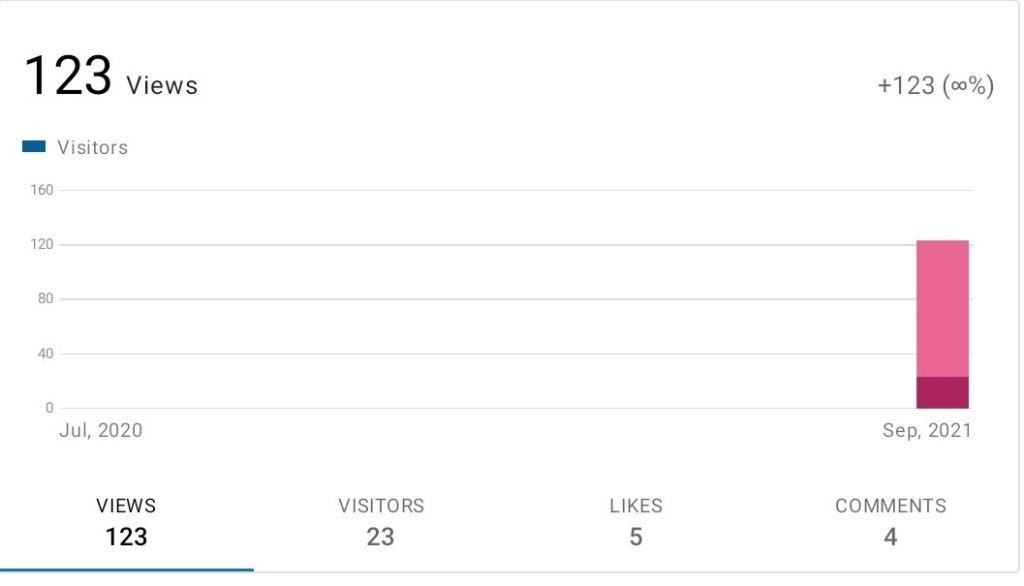
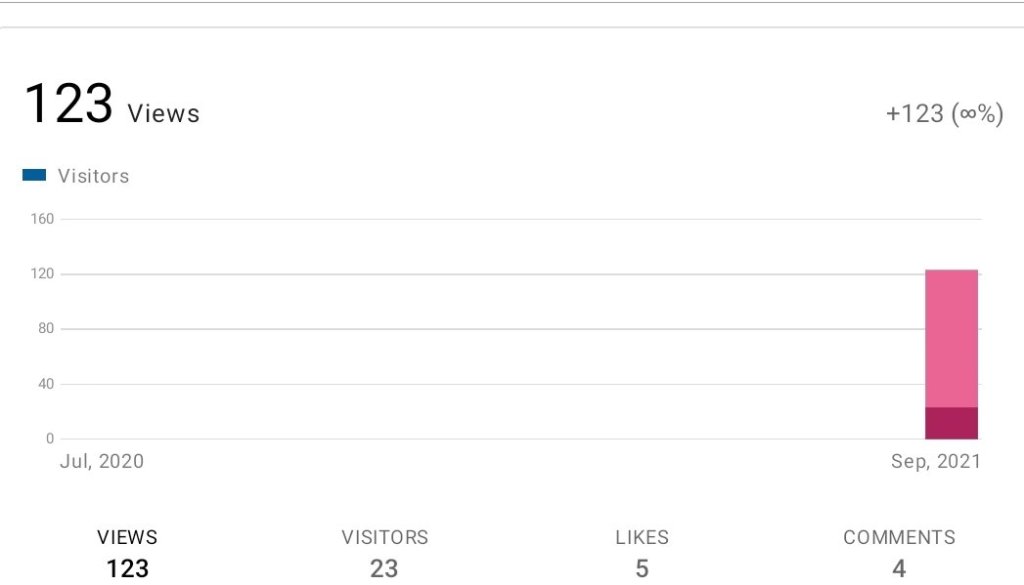
STATS OF SEPTEMBER. OCTOBER STATS DON’T SHARE WITH ALL OF YOU BECAUSE DANGER . THE OCTOBER STATS ARE CHANGED AND SO DON’T WORRY 😉ABOUT ME AND MY WEBSITE . HAPPY JOURNEY 😊😃😺. 😊 GOOD LUCK MY WEBSITE AND DO BETTER . THE CREATION OF THIS WEBSITE ON – 13TH SEPTEMBER 2021 . COMMENT , LIKE , SHARE AND FOLLOW. CHECK MY CHANNEL OF YOUTUBE ALSO . WE POST THE FACT AND NEWS . THIS WAY FACT BY – THROUGH THE FACT / @throughthefact































































 through the fact
You must be logged in to post a comment.